U.S. Navy
The TrenchThe U.S. Navy is central to the novel’s history of deep-sea exploration and its later struggle over strategic resources. Its three-man submersible Seacliff carries Jonas Taylor into the Mariana Trench, where a disastrous encounter with a Megalodon ends his Navy piloting career; years later, the Navy is positioned to intervene in the contest over the fuel source hidden in the trench. These two roles connect an individual catastrophe to a conflict shaped by national security and the limits of operating far below the surface.
Submarine Service and the Seacliff Dive
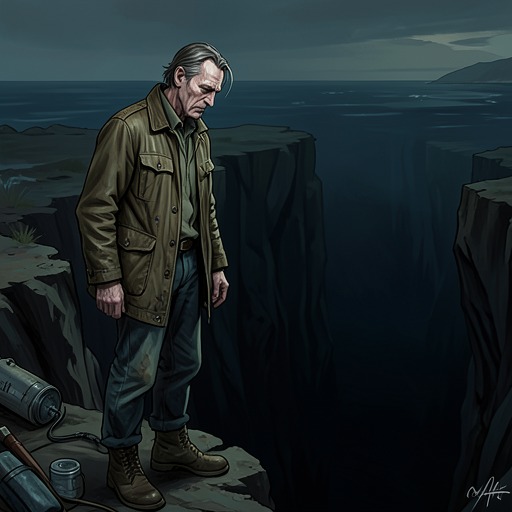
Eleven years before the present action, Jonas piloted Seacliff on a series of top-secret Navy dives into the Mariana Trench, nearly seven miles below the surface. On the final dive, he was exhausted and knew he should not have been sent down, but the mission had no other available pilot. During the five-hour descent through darkness, he saw a white glow and then a huge shark rising from the depths. Jonas had never heard of a Megalodon; confronted with what he believed was an immediate threat, he jettisoned the submersible’s weight plates and drove Seacliff upward.
The emergency ascent caused a pressurization failure. Both scientists aboard died, and Jonas spent three weeks recovering before being sent to a psychiatric ward for evaluation. The episode establishes the human cost of the Navy mission without making the creature’s reality an accepted institutional fact: Jonas later describes trying to prove that the shark existed rather than being an aberration of the deep, as the Navy had said. The dive thus leaves him with two linked burdens, the deaths of his crewmates and the dismissal of the encounter that had prompted his response.
The Career That Followed the Disaster
The Seacliff incident abruptly breaks Jonas’s professional identity as a deep-sea pilot. He gives up the work he most loved and, for the next seven years, becomes absorbed in proving that the creature was real. He returns to school, earns advanced degrees in paleo-biology, and develops a theory that prehistoric great white sharks migrated to the warmer abyssal waters of the Mariana Trench during the Last Ice Age. His research is rejected by scientific colleagues, and his papers are barred from many institutions; the novel therefore shows his change of career as both a response to trauma and a prolonged attempt to secure recognition for what the Navy’s account had discounted.
A later opportunity to return to the trench comes through Masao Tanaka, who needs help retrieving a malfunctioning UNIS instrument. Jonas initially refuses because he cannot face the place where the Seacliff dive went wrong. His eventual return places the past mission in a new context: the trench is no longer only the site of an encounter that destroyed his Navy career, but also a location where scientific work, commercial ambitions, and hidden strategic interests converge.
From Personal History to National-Security Stakes
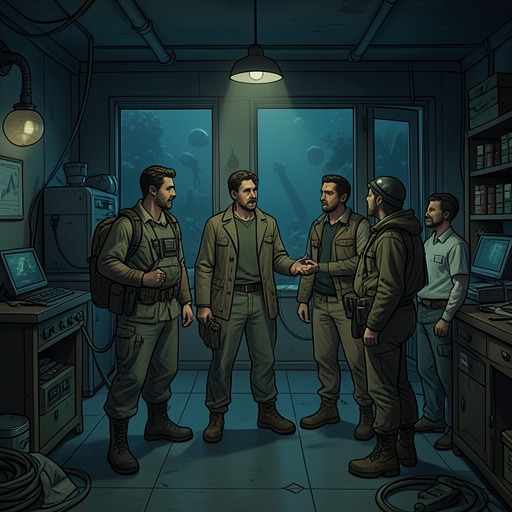
The Seacliff dive also acquires significance beyond Jonas’s personal story. A later briefing explains that two scientists aboard the Navy submersible were fusion physicists. Analysis of manganese nodules they collected revealed inert gases trapped in the rocks, and the location of those nodules became important once investigators connected them to the fuel source sought by Benedict Singer. The accident that had been remembered as a disastrous encounter with a prehistoric predator therefore also left behind material evidence relevant to a potentially powerful fusion technology.
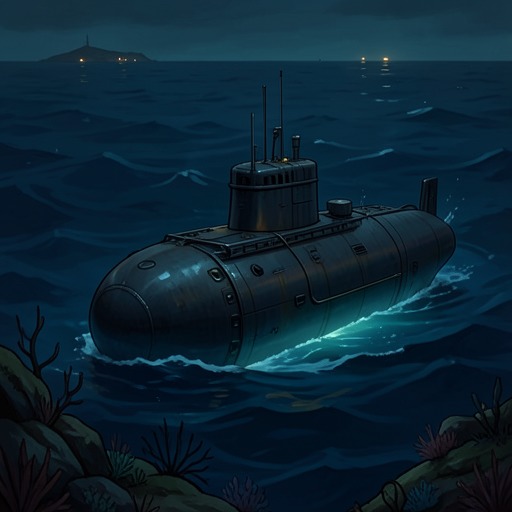
The U.S. Navy’s later role is framed as a response to the danger of a private enterprise controlling that resource. Officials explain that the Benthos is difficult to detect in the Mariana Trench: its depth frustrates satellite observation, sonar reconnaissance is difficult, and its heavily protected hull would make a depth-charge attack unlikely to cause significant damage. These constraints make ordinary surveillance or force an uncertain answer to Singer’s expedition. They also clarify why the conflict involves intelligence gathering and legal authority as well as military capability.
Planned Intervention and Narrative Significance
After a covert operation is used to provide Singer with a legitimate reason to enter the trench, the U.S. Navy’s stated plan is to move in and confiscate the manganese nodules under Exclusive Economic Zone law once Singer has found and loaded them. The plan is conditional, not a completed seizure: officials need to know that the material is aboard, and they are concerned about getting people still on the Benthos off the vessel before the Navy arrives. The military objective is consequently entangled with the immediate safety of those caught inside the expedition and the risk that Singer may use them as hostages.
The institution’s two appearances create a pointed contrast. In Jonas’s past, a secret Navy mission ends with two deaths, a failed ascent, and the end of a pilot’s career; in the later crisis, the Navy represents the force expected to prevent a single organization from controlling a resource with global consequences. Yet its intervention is not effortless or detached from risk. The difficulty of reaching the Benthos and the need to act under legal and operational constraints make the trench a place where military power is present but limited. Through that contrast, the U.S. Navy links the novel’s intimate story of trauma and disputed testimony to its broader questions about who may explore, who controls the discoveries, and who bears the danger created by those pursuits.